

Transferring Colleges: It’s Harder Than You Think
Athletes come to us all the time with the idea that they can transfer between NCAA Division I or II schools without any problem; they don’t realize that coaches at these levels hold all the power, and can decide whether or not an athlete can transfer. That’s why athletes must spend time early in their high school career focused on recruiting. Contacting coaches on your own will go a long way towards helping you find an athletic scholarship.
You Will Probably Need a Signed Release Form
Basically, when you want to transfer from an NCAA Division I or II program to another DI or II program, you must first get written consent from your coach and athletic director just to talk to other schools. So before you even 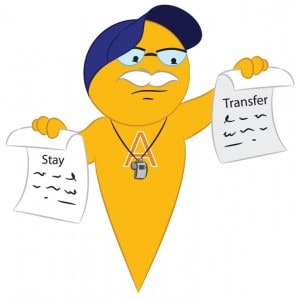 know if there are any other schools out there that are interested in you, you must let your coach know that you are thinking about leaving. Coaches aren’t allowed to take away your scholarship just because you were interested in transferring, but they will often reduce your playing time significantly. If you receive an initial release, your coach still has the ability to approved or disapprove your transfer to a specific school or conference. Typically, coaches will restrict your transfer to the same conference, or to a non-conference school that your current school regularly plays. This means that you will likely have to transfer to a school outside of the region you currently play in, or to a lower division level.
You Might Have to Sit for a Full Year
You still aren’t out of the woods though. If you play football, basketball, or hockey, you will have to sit out one academic year of competition- which means you will not be able to sign an athletic scholarship for that year either; if this is your second time transferring, you may have to sit out a full academic year as well, regardless of the sport you play.
The current transfer situation is a big problem for the NCAA. The rules heavily favor colleges, not athletes. It’s unfair to the athletes because it is their experience that the NCAA should be concerned about protecting. Coaches are allowed to move freely between schools whenever they want, but when a coach leaves, an athlete still must get a signed release that can be heavily restricted.
NCAA Transfer Guide
Here is our new transfer guide for student athletes. Written by a former NCAA Compliance officer, it explains what you need to do and what your options are.
Do you think the transfer process is fair for college athletes? Let us know in the comment section below, or connect with us on Facebook, Twitter, or Google+!
Find opportunities for athletic scholarships and get connected to college coaches.
